

Bánh mì for you and me in Kanata
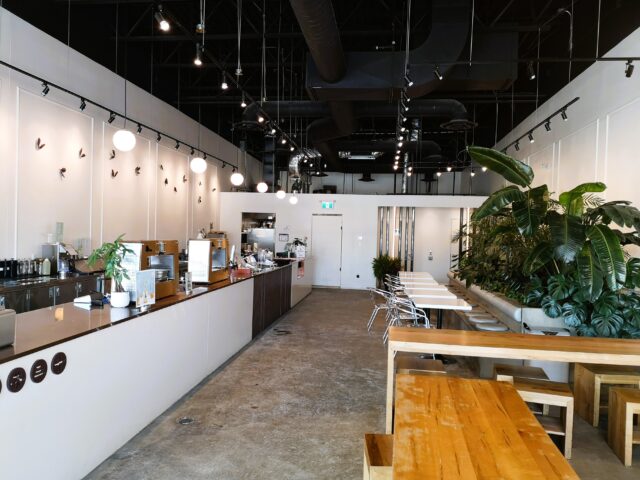
It’s a three-in-one venue that is perhaps part of a minor trend: one space and three collaborating, rather than competing, businesses sharing real estate, one of which is Banh mi Girl.
Ensconced in a typical strip-mall location in Kanata, the location is a akin to a mini-food mall, a vast almost overwhelmingly large room (the height seems greater than the width times the length) that has the effect, to me, of making the restaurant area disappear into its relatively bare, minimalist decor, I might call it. I visited for a Saturday lunch, and the place was empty — which only made it seem even more cavernous.
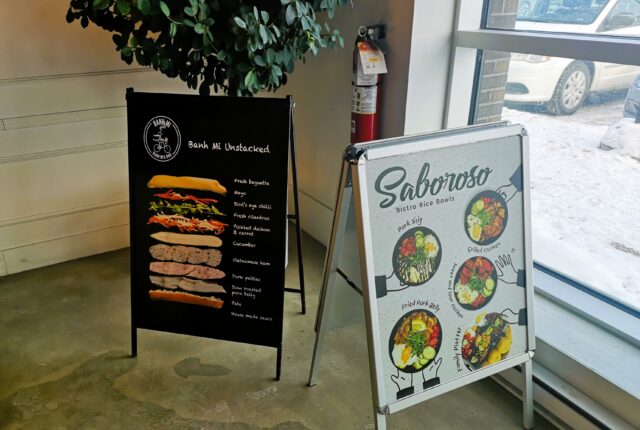
Yet, Banh mi Girl, formerly of ByWard Market, I understand, has a solid reputation for turning out a decent bánh mì, the famous Vietnamese sandwich, among a few other dishes.
In the long and delicious history of the simple sandwich, a form of food that has been around since the Earl of Sandwich purportedly demanded it in the mid-1700s, the bánh mì is one of the greatest creations and a favourite street food.
The humble baguette, toasty and crisp and loaded with a protein such as pork, chicken or beef, vegetables, cilantro and brushed with a spicy mayo, is the wondrous blending of Vietnamese and French cultures—yet carries with it the imperialist rule of Indochina.
Unlike the Earl’s original sandwich, the bánh mì is not all that old. The perhaps mythical circumstances of the bánh mì’s appearance in the 1950s can be reduced to a cliché: necessity as the mother of invention. One story goes that the sandwich started out as a basic French plate of bread, cheese and meat, eaten as the French are wont to do.
When the Europeans pulled out of the region in 1954, one or another practical and enterprising Vietnamese entrepreneur stuffed the baguette with the meat, added more vegetables, possibly including slivers of crunchy cucumber like we get today, and slathered it with a spicy mayonnaise so that customers could take it to go.
It was simply a brilliant idea. Then, the sandwiches started to appear on “pop-up” bánh mì carts all over the country. When the fall of Saigon rocked the world in 1975, the sandwich — happily — spread around the globe in a sort of bánh mì diaspora.
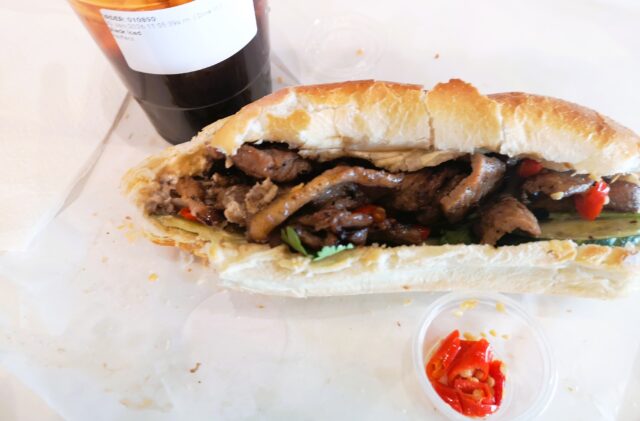
I did enjoy the nicely spiced and quite tender grilled pork with its line up of classic veg and greenery, such as cilantro, and sauces (and some very hot bird’s eye chilis on the side).
A caveat, however: although the bun was very fresh (and apparently baked in-house), I found it too soft and fragile: with two hands holding it and some wide-mouthed bites necessary, it crumbled and fell apart ejecting most of the contents that were nestled inside. I can’t help but think that a more traditional baguette with a firmer crust and more sturdy crumb would permit better banh mi munch.