

Get ready to do some canning
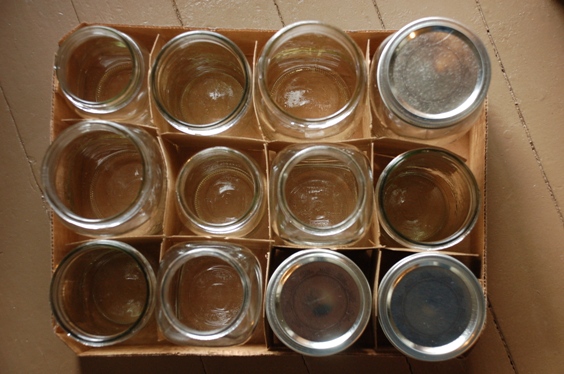
While canning and preserving, techniques and methods that are often thought of as fall activities when the growing season has slowed and winter comes on, there are delicious things to preserve now, in the spring and early summer, that can be stored and used in your daily dining later in the year — when those items can no longer be found fresh.
In her 2008 book Anita Stewart’s Canada: The Food, the Recipes, the Stories, the late-great Elora author and food activist summarizes the E.D. Smith story as it started in Winona, Ontario.
Smith planted peaches, apples, and plums, with each orchard having its own beehives for pollination. By the mid-1880s Smith, fed up with a plodding fruit distribution system and low prices, “decided to make jam. The first such operation in Canada,” notes Stewart.
“By 1905, his factory was in full operation. E.D. Smith Pure Fruit Jam became an icon of Canadian food manufacturing.”
Napoleonic preserves
We can thank Mr. Smith, but we need to go back even further to snap open the lid on canning origins, at least in the modern era. Although he has been dead and gone about 170 years now, Nicolas-Francois Appert gave us the technique of preserving foods in air-tight containers.
Appert, a Parisian chef, had spent many years experimenting with wax- and cork-sealed jars and boiling them in water before he answered the call of what was essentially a Napoleonic cooking contest.
The little general was waving around French francs for anyone who could preserve franks for his marauding armies (whom, he had already announced, march on their tummies). Appert finally prevailed after about a decade and proffered up his canning method and techniques winning in 1810. The rest is jelly, jam, and syrup history.
Appert struggled despite his innovation; he made it onto a French postage stamp in 1955 recognizing his vital contributions. By then, canning momentum and expertise had long before passed to the English and Americans, among the latter of whom was John Landis Mason: he invented and patented the glass jar and screw-on lid combination in 1858. It remains part of our cooking vocabulary, though Mason died a pauper.
Despite the rapid advance of technology we experience in our daily lives, canning hasn’t changed very much at all. Today, food is basically preserved by three methods: canning, freezing, and drying.
Freezing slows enzyme activity that causes food to deteriorate and is the quickest and easiest method of preserving. Things like green beans—and even the divine and funky little fiddlehead—are best frozen, suggests Rose Murray, Cambridge, the late Ontario-based broadcaster and author of A Taste of Canada: A Culinary Journey.
“Blanch them to stop the enzymes that will continue to make them deteriorate. Drain them, cool them, dry them off, and pack them in plastic bags and freeze. When you take them out it’s just a question of steaming them for a couple of minutes.”
Drying or dehydrating food simply removes most of the item’s moisture requiring little processing energy and taking up little space for storage. Dehydrated foods are perfect for taking while travelling or with outdoor activity.
Canning boom
Though it takes the most skill, canning is a preservation method that has been making something of a comeback in our kitchens. Bernardin, a major Canadian manufacturer of canning equipment, has noted significant sales increases in the last several years.
Canning preserves food without desiccation, the sour flavours of pickling, or the sweetness of sugar. The foodstuff is cooked in hermetically sealed jars to kill bacteria, molds, and enzymes; it can be stored without refrigeration in a cool, dark place for a year and maybe more depending on the food item.
While canned food loses some nutritional value, if it is processed at its peak of flavour it can still be more nutritious than some fresh foods that have been transported great distances and over longer periods of time.
Murray has observed the renewed interest in canning. As she tells it, historically canning was a way of preserving the harvest and making sure you had something to eat in the winter months.
“I grew up on a farm south of Collingwood,” Murray said. “We grew everything we ate, and my mother and I were in charge of the huge garden we had. It was the way we had fresh food in the winter. I can still see in our cellar a big long trestle table by the stone foundation. It was full of all kinds of colourful produce.”
Field to fork eating
Convenience is key too, she points out. When you go to your root cellar, your canned food—beets, relishes, peaches—are ready to go, requiring neither thawing nor cooking.
However, it is critically important, Murray stresses, to make sure you have up-to-date and reputable canning recipes, the proper equipment, and that you follow the sterilization steps and guidelines carefully.
The canning renaissance is tied closely to a heightened interest people have in where their food comes from, its provenance as it were. They want more control of their food sources and are planting urban gardens, Murray says.
“There has been a huge resurgence in canning and preserving. People are starting to become more aware of what they eat. They don’t want the additives and the sodium of processed foods. If you do your own canning, you know what you’re getting.”
Is cost an issue? Murray thinks so, even after you factor in the expense of canning equipment.
“I saw in an upscale shop recently a jar of beets for $20. Go to the market, get a six-quart basket for $4, and spend a little bit of time canning. It is a question of economy.”
Many young adults are starting to think similarly and they’re growing small gardens and preserving more and more, she adds.
“It’s field to fork in your own backyard.”
* * *
Canning Basics, adapted from Saving the Seasons, (Waterloo, ON: Herald Press, 2010)
– Can in the season: get the freshest produce for the freshest canned results;
– High-acid foods like fruits, pickles and tomatoes can be canned by means of the boiling water bath method;
– Low-acid foods like meats and non-pickled vegetables must be preserved through pressure cooking;
– Select produce to can that is at the perfect stage of ripeness, not overripe;
– Wash food to be canned thoroughly along with the utensils you are using.
What you need
Many hardware stores and larger supermarkets will have the supplies. Basic starter kits cost between $15-$20 with enameled steel pots of various sizes between $25-$80. Jars and lids will cost $8-$15, again depending on size.
You will need:
– a stove-top enameled steel water bath canning kettle or pot;
– metal rings, lids, and jars that will hold your finished canned goods;
– a canning rack that sits inside the water bath;
– a jar lifter;
– magnetic wand for removing lids (optional);
– a wide-mouth on-metallic funnel;
– a silicone spatula or two;
– an assortment of kitchen towels;
– kitchen space!
Bernardin’s step-by-step canning (adapted from www.homecanning.ca)
- Review the recipe to ensure you have all the ingredients and tools. For best results, do not make substitutions;
- Fill your home canner with fresh water and heat;
- Visually inspect jars for nicks, cracks, uneven rims or sharp edges that may prevent sealing or cause breakage. Wash jars (even if new) and place on a rack in a boiling water canner. Cover jars with water and heat to simmer (180°F/82°C). Keep jars hot until ready to use;
- Set screw caps aside, place lid closures in small pot of hot (but not boiling) water;
- Set up your “filling station” and have your non-metallic funnel, your ladle, paper towels, tongs and screw bands at the ready. Also, if making spreads, a spoon and bowl for skimming during cooking time is handy;
- Set up your “resting station.” Set clean tea towels in a place near the stove where your processed jars can rest, undisturbed, for 24 hours;
- Pre-measure dry ingredients. Some recipes are time sensitive, so having ingredients ready is essential;
- Prepare fresh ingredients as per directions;
- Heat process ALL home canned foods (freezer spreads excepted);
- Follow these step-by-step directions for canning success.